
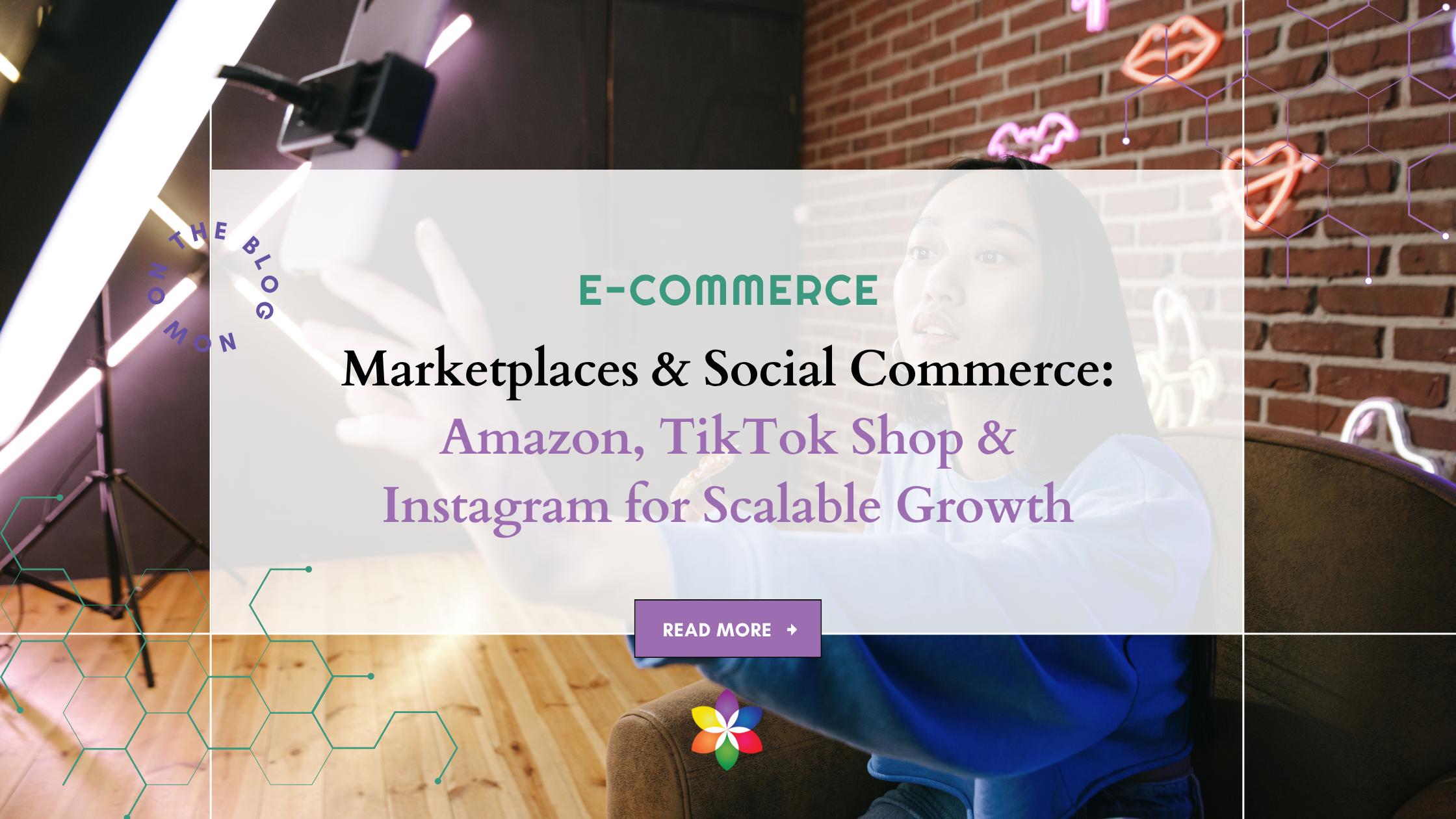
There’s an uncanny feeling when your product shows up where strangers can buy it at 2 a.m. on their phones: part thrill, part terror. Marketplaces and social commerce give you scale and discovery you can’t buy with ads alone — but they also introduce fees, returns, and brand dilution if you’re not careful. The trick isn’t to pick one channel and cross your fingers. It’s to treat channels like rooms in a house: each serves a purpose, and each needs a door that leads back to your living room (your brand).
This post is for heads of growth and channel managers who need to make smart, strategic choices about where to sell — without trading margin for reach. We’ll walk channel economics, break down the social-commerce flow from short-form content to impulse checkout, and close with a LiLA approach to keep your omnichannel strategy profitable and on-brand.
Channel economics: fees, returns, and discoverability tradeoffs
Imagine three friends at a crowded market stall. Amazon is the megastore with millions of shoppers; it’s noisy, efficient, and expensive. TikTok Shop is the flash mob that turns a dance into a purchase; it’s novelty-powered and conversion-hungry. Instagram Shops is the boutique on Main Street — beautiful, social, and tied to lifestyle.
Each channel gives you customers, but each takes a slice of what they bring:
- Fees & commissions: Marketplaces and social checkout options charge fees — listing, fulfillment, commissions, and sometimes promotional ad spend baked into the platform. That margin hit is real. Calculate your net margin after fees before you list a SKU. For lower-margin items, marketplaces can erase your profits.
- Returns & logistics: Returns on marketplaces can be higher, especially when discovery is impulsive. Some platforms force you into specific return policies or absorb costs. Factor returns into your expected unit economics. Higher return rates mean less predictable LTV.
- Discoverability vs. control: Marketplaces amplify discoverability with built-in audiences and search algorithms. But you trade ownership of the customer data. Social commerce is discovery-plus-action: a short video can turn awareness into a purchase in minutes. Your brand voice can survive here if you control the narrative, but be mindful — some platforms favor price or the algorithm’s “engagement” metric over brand story.
- Pricing pressure & channel conflict: If your products appear cheaper on Amazon or a third-party retailer, you’ll train customers to hunt for deals instead of coming to your site. Defend your brand by setting clear MAP policies, using differentiated SKUs, or offering exclusive bundles on your direct channel.
- Fulfillment models: Fulfillment by Marketplace (FBA, for instance) reduces logistics work but increases fees and may affect your control over packaging and branding. Self-fulfilled marketplace listings keep brand assets in your hands but demand ops muscle.
Channel decisions should be financial and strategic. Ask: Will this channel acquire customers we can’t find on our site? Does the math work at current conversion and return rates? Keep a SKU-level profit model that factors in fees, returns, and CAC by channel. If you can’t make money after fees, don’t list.

Social commerce: short-form content → product pages → impulse checkout
Social commerce is less about traffic and more about wiring attention to immediate action. Short-form video (15–60 seconds) flips the traditional funnel on its head: discovery and purchase often happen in the same session. That’s why your creative needs to be conversion-minded, not just pretty.
Think of the social-commerce flow in three simple steps:
- Attention with a short story: Short videos should do one of three things quickly—solve a tiny problem, show a satisfying transformation, or tell a micro-narrative. The opener matters. Hook in 3 seconds or lose the scroll.
- One-click path to product: The creative should point clearly to the product: “Tap to buy,” “Limited drop,” or “Available in your area.” Link directly to a product page designed to convert mobile shoppers fast — minimal copy, one photo, price, and a clear CTA.
- Impulse-friendly checkout: Social checkouts (in-app or express checkout) reduce friction. But don’t force the cheaper-better tradeoff. If you need customer emails for retention, offer one-click checkout that still captures an email or use post-purchase enrollment flows to gather consent for SMS/email.
A few practical tips:
- Short, testable creative: Produce variations and test headlines, first 3-second hooks, and CTAs. Short-form ad fatigue is real — refresh creatives regularly.
- Native commerce vs. destination pages: Native checkout converts, but it gives less control. If you need first-party data and higher LTV, drive to a lightning-fast mobile product page that captures email in exchange for a simple value (shipping discount or fast delivery).
- Leverage UGC and creators: Creator posts convert because they’re trusted. Structure partnerships with clear KPIs (clicks → purchases) and standardized promo codes for tracking.
- Inventory sync & expectations: Social virality can spike demand. Make sure your inventory system can handle surges or else a viral moment will become a customer-service disaster.
Short-form commerce rewards speed, clarity, and honest expectations. If you value repeat buyers and first-party relationships, prioritize flows that capture opt-ins post-purchase.
LiLA approach for omnichannel sync & brand control on marketplaces
At LiLA, we treat marketplaces and social commerce as mutually reinforcing channels — not enemies of your site. Our approach is threefold: protect margin, capture data, and preserve brand voice.
1. SKU strategy and channel fit
Not every SKU belongs everywhere. Create channel-specific assortments: let higher-margin, brand-defining products live on your direct site and Instagram; tactical, high-turn SKUs can live on Amazon or marketplace channels. Consider differentiated packaging or exclusive bundles for direct channels to disincentivize price shopping.
2. Unified inventory & order orchestration
Invest in a single source of truth for inventory. Whether it’s a lightweight middleware or an out-of-the-box OMS, syncing stock across channels prevents stockouts and messy cancelations. Prioritize tools that surface channel-specific metrics (CAC by channel, return rate, average order value).
3. Data capture & post-purchase pathways
When platforms don’t give you email, give value post-purchase to capture it. Simple plays work: a post-purchase email with exclusive content, a loyalty invite, or a one-click reordering link. Use order receipts and packing slips to invite customers to join your community (QR code to a welcome page with a discount or content).
4. Brand consistency playbook
Create a short brand playbook for channel partners and creators: tone, imagery, product claims, and approved messaging. For marketplaces where you can control images, use the same high-quality lifestyle photography you use on your website. For creator campaigns, give a creative brief that encourages authenticity but protects the main product claims.
5. Financial guardrails & reporting
Set SKU-level profitability thresholds by channel. Automate regular reports: CAC, net margin after fees, return rate, and LTV by channel. If a channel underperforms against benchmarks, pause and experiment with SKUs, price, or creative before scaling spend.
6. Test & learn cadence
Run short experiments—two-week promos, creator partnerships, or limited drops—and measure lift, not vanity metrics. Use learnings to optimize assortment and creative playbooks.
Final thought & next steps
Marketplaces and social commerce can grow your brand in real, measurable ways — but only if you treat each channel with intention. Make the math work, design the experience for mobile-first buyers, and use post-purchase moments to reclaim the customer relationship. Protect your margins with clear SKU strategies, and don’t let virality become chaos: plan for inventory, returns, and the human work behind fulfillment.
Book a call and we’ll review how to optimize your marketplace + social presence — map the economics, test creative approaches, and build the ops scripts and docs your team needs to scale without burning margin.
Next up in the series: with channels live, your focus shifts to operational scale—developer docs, partner APIs, and multi-venue rollouts that make repeatable launches possible.
Other Articles in the Ecommerce Series
Choosing the Right Ecommerce Platform for Your Brand
Memberships & Recurring Revenue
Dropshipping & Print-on-Demand
Fashion First
Ecommerce + Fundraising
B2B & Construction Ecommerce
Farm-to-Table Commerce
Checkout Optimization
Retention & Lifecycle
Marketplaces & Social Commerce
Scaling Ops
Measurement & Dashboards
From Blog to Business



Leave a Reply